


My Talking Tom
Outfit7 Limited
My first impression of My Talking Tom was that it is less about winning and more about building a small daily habit around a virtual cat. Tom reacts when I speak to him, responds to taps, and gives the game its personality through simple interactions. That makes it easy to understand within a minute, even for someone who rarely plays mobile games.
It is a casual game from Outfit7 Limited, released on Nov 11, 2013, and it has remained one of the most familiar virtual-pet experiences on mobile. The scale of its audience is substantial: it has passed one billion installs, with an average rating of 4.3 from around 18 million ratings and roughly 399 thousand written reviews. Those figures do not automatically make it right for everyone, but they do show that the basic idea has stayed appealing for a very broad audience.
I would describe the central appeal as short, repeatable moments of interaction. You check on Tom, make him respond, look after his needs, and return later when you want another light distraction. It is a good fit for relaxed play rather than a demanding challenge, and that distinction matters when comparing it with puzzle games, competitive titles, or deeper simulation games.
Related News

Discover the Magic of My Talking Angela: Your Virtual Feline Friend

How My Talking Tom Redefines Mobile Companionship

How to Make Fortnite Feel Smarter on Mobile
How the free experience creates value
The game is free to download, which makes the initial decision straightforward. I can install it without paying an entry fee and find out quickly whether the talking-pet format suits me. That is meaningful value for families, curious players, and anyone looking for a low-commitment game to keep on a phone.
There are in-app purchases ranging from $0.99 to $99.99 per item. I see that as the main point requiring care. The free access gives the game a fair trial, but the presence of purchases means I would not hand the phone to a child without first considering the device’s purchase controls. The lower-priced items may feel easy to justify in the moment, while the highest listed price is a much more serious spending decision. I would treat every purchase as optional entertainment spending, not as something needed to discover whether Tom is enjoyable.
Related News

Why WhatsApp Messenger Still Makes Everyday Communication Feel Easy

Jurassic World: The Game Is the Better Dino Tycoon for Strategic Players

Threads in Real Life: Who Should Join, Lurk, or Leave

How SHEIN Turned Shopping Into an Endless Content Feed

Should You Switch to Microsoft Outlook on Mobile?

Why Gallery Keeps Pulling Users Back
The value is strongest when I use the game in small portions. A few minutes while waiting for an appointment, taking a break from work, or keeping a child occupied during a quiet moment can be enough. It does not demand a long session to feel complete. That is one reason the free model works well here: the game can provide a useful little diversion before I decide whether I want to spend anything at all.
I also appreciate that the basic concept is immediately readable. There is no complicated story to remember and no elaborate control scheme to learn. Tom is the focus, so the game’s value comes from his reactions and the simple routine of returning to him. Players who enjoy expressive characters may get more from this than players who need constant novelty, strategic depth, or a clear competitive goal.
What the interaction feels like in everyday use
In practical use, I would open the game when I want something more responsive than a static video but less demanding than a traditional game. Talking to Tom creates a playful feedback loop: I do something, he reacts, and that reaction encourages another small interaction. The appeal is social in a very lightweight way, even though I am not communicating with another person.
Gallery
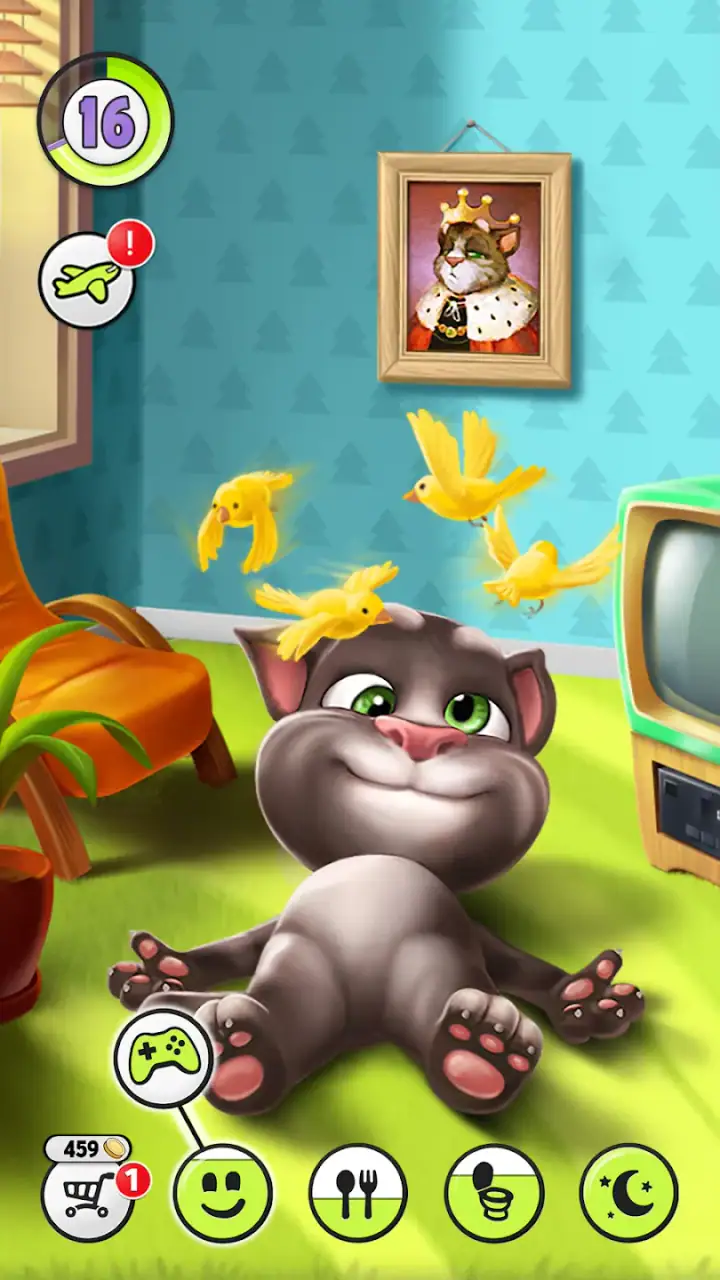
A realistic scenario would be a child using it after school for a short, supervised break. The child can interact with Tom without needing to understand a complex objective, while an adult can decide whether the free experience is enough. Another scenario is an adult using it as a brief mood-lifter between tasks. In both cases, the game works best when it stays a small activity rather than becoming the only source of entertainment.
One useful habit is to decide in advance whether the game is being used for conversation, care, or simple amusement. If I open it with no expectation beyond a quick interaction, I am less likely to feel that I need to unlock or purchase something to make the session worthwhile. That mindset helps preserve the value of the free version.
Where it stands beside other casual games
Compared with a match-three puzzle game, this is much less focused on solving problems or improving a score. Compared with an endless runner, it offers less pressure and less emphasis on reflexes. Compared with a full life-simulation game, it is easier to pick up but also narrower in what it asks from me.
That narrower design is both its strength and its limitation. A virtual pet can feel personal because the same character is waiting whenever I return. A puzzle game may offer more measurable progress, while a competitive game may provide stronger long-term goals. I would choose Tom when I want character-driven, low-pressure interaction; I would choose those alternatives when I want mastery, challenge, or a richer system to explore.
The talking feature also gives it a different identity from many ordinary casual games. It is not just a set of levels that I clear and forget. Tom’s reactions are the reason to come back. For some players, that makes the experience charming. For others, the novelty may fade once the surprise of hearing and seeing his responses wears off.
Tradeoffs, practical limits, and the right audience
The biggest tradeoff is repetition. The game’s comfort comes from doing familiar things with a familiar character, but that same familiarity can make sessions feel similar. I would not recommend it to someone who needs a steady stream of new mechanics or a strong end goal. It is better understood as a digital companion than as a game built around completion.
Another consideration is spending discipline. Since the game is free but includes optional purchases, the experience can be inexpensive or much more costly depending on how the player approaches it. I cannot call the free version poor value; it provides a clear way to try the core idea. At the same time, I would avoid describing every optional purchase as good value automatically. The right question is whether a particular item adds enough enjoyment for the person using it, not whether it is necessary for access.
For a shared family device, I would make the purchase situation part of the setup routine. An adult should explain that free installation does not mean every later tap is free. This is especially important for younger players, because the game’s friendly presentation can make spending feel like part of play rather than a separate financial decision. The age rating is Everyone 10+, so I would still match the experience to the individual child and supervise use where appropriate.
The game runs on Android devices using at least version 6.0 of the operating system. That gives it a broad technical reach, although compatibility alone does not guarantee that every older phone will feel equally comfortable. On a device with limited space, battery, or responsiveness, I would judge the experience after installation rather than assuming that a long-established game will feel identical everywhere.
The current version is 26.1.9.8120. I would keep the game updated through the normal store process when possible, especially if I rely on it regularly. Updates can affect how an app behaves, so anyone using an older phone should pay attention to whether the device continues to handle the current release smoothly.
Small habits that improve the experience
My first tip is to keep sessions intentionally short when the game starts to feel repetitive. Because the appeal is based on returning to Tom, there is no benefit in forcing a long play period after the interaction has stopped feeling fresh. Closing the game and coming back later usually fits its design better than trying to extract a full evening from it.
My second tip is to separate curiosity from commitment. I would try the free experience for several days before considering any purchase. That gives me a better sense of whether I enjoy Tom’s personality or merely enjoyed the first few minutes of novelty. It also makes the purchase decision more deliberate, which is particularly useful on a family device.
My third tip is to use voice interaction where it genuinely adds fun, rather than treating it as the entire reason to play. Tom’s ability to chat is the recognizable hook, but the game is more satisfying when I treat it as one part of a broader virtual-pet routine. If speaking aloud is inconvenient in public or around other people, the game can still work as a tap-based diversion.
A fourth practical insight is to choose this game according to the desired type of attention. It is suitable when I want gentle engagement that can be interrupted easily. It is a poor choice when I need a game that rewards uninterrupted concentration, precise timing, or strategic planning. Knowing that before installing it prevents the common disappointment of expecting a deeper game from a deliberately simple format.
Who should install it, and who should pass
I think it is a good match for players who enjoy virtual pets, animated characters, and casual interaction without a steep learning curve. It can also suit families looking for a recognizable, easy-to-explain game, provided an adult handles expectations around optional spending. Someone who enjoys checking in briefly rather than completing long levels may find the format especially comfortable.
It is less suitable for players who dislike repetition, voice-based character gimmicks, or games whose main reward is a character’s reaction. If I want a rich story, a difficult campaign, or a tightly balanced competitive system, I would skip this one and choose a game designed around those goals instead. The same applies if I know I am likely to make impulse purchases simply because an optional item appears attractive.
The large audience and 4.3 average suggest that the concept works for many people, but they should not be treated as a guarantee of personal enjoyment. A virtual pet is a taste-driven format. The deciding test is simple: do I like returning to the same character for small interactions? If the answer is yes, the game has a clear reason to stay installed. If the answer is no, its popularity will not solve the underlying mismatch.
My recommendation after using it
I recommend trying My Talking Tom if you want a free, casual virtual-pet game that can fill a few spare minutes and does not require advanced gaming skills. The free entry point makes experimentation easy, and the talking cat gives it more personality than a basic checklist-style pet simulator. I would keep purchases optional and set sensible spending boundaries before letting a child use it.
My final verdict is positive but specific: this is a good companion-style diversion, not a replacement for a deeper game. Its best value comes from free, brief, repeatable interactions. Its weakest point is that the same simplicity that makes it welcoming can also make it feel repetitive, especially for experienced players. If that tradeoff sounds acceptable, installing it is a reasonable choice. If you need challenge, progression, or substantial variety, I would skip it and spend your time on a different kind of casual game.
FAQs for My Talking Tom
What is the main objective of My Talking Tom?
My Talking Tom is a virtual pet app where the main objective is to care for and interact with your pet cat, Tom. Users can feed him, dress him up, and play mini-games to earn coins. The game allows for personalized experiences by customizing Tom’s appearance and his environment.
Is My Talking Tom suitable for children?
My Talking Tom is designed to be family-friendly and is suitable for children. It offers simple controls and engaging activities that are appropriate for younger audiences. However, parents should be aware that the app includes in-app purchases and ads, which may require supervision to prevent unintended purchases.
Are there any in-app purchases in My Talking Tom?
Yes, My Talking Tom includes in-app purchases. Players can buy coins and other items to enhance their gameplay experience. While these purchases can accelerate progress or unlock special items, they are not necessary to enjoy the game. Users should manage settings to avoid accidental purchases.
How often does My Talking Tom require internet access?
My Talking Tom can be played offline for most features, such as caring for Tom and playing mini-games. However, an internet connection is needed for certain features like updates, accessing leaderboards, and watching ads to earn extra rewards. Regular internet access enhances the overall experience.
What are the main interactive features of My Talking Tom?
My Talking Tom offers a wide range of interactive features, including talking to Tom and hearing him repeat words, dressing him up in different outfits, and decorating his home. Players can also engage in various mini-games within the app, which helps earn coins and keeps the gameplay entertaining.
Pros
- Engaging and interactive gameplay.
- Customizable character features.
- Frequent updates with new content.
- Simple controls suitable for all ages.
- Offline play available for convenience.
Cons
- In-app purchases can be costly.
- Ads can be intrusive at times.
- Limited mini-games variety.
- Requires significant storage space.
- Repetitive tasks may become dull.


